

Introduction
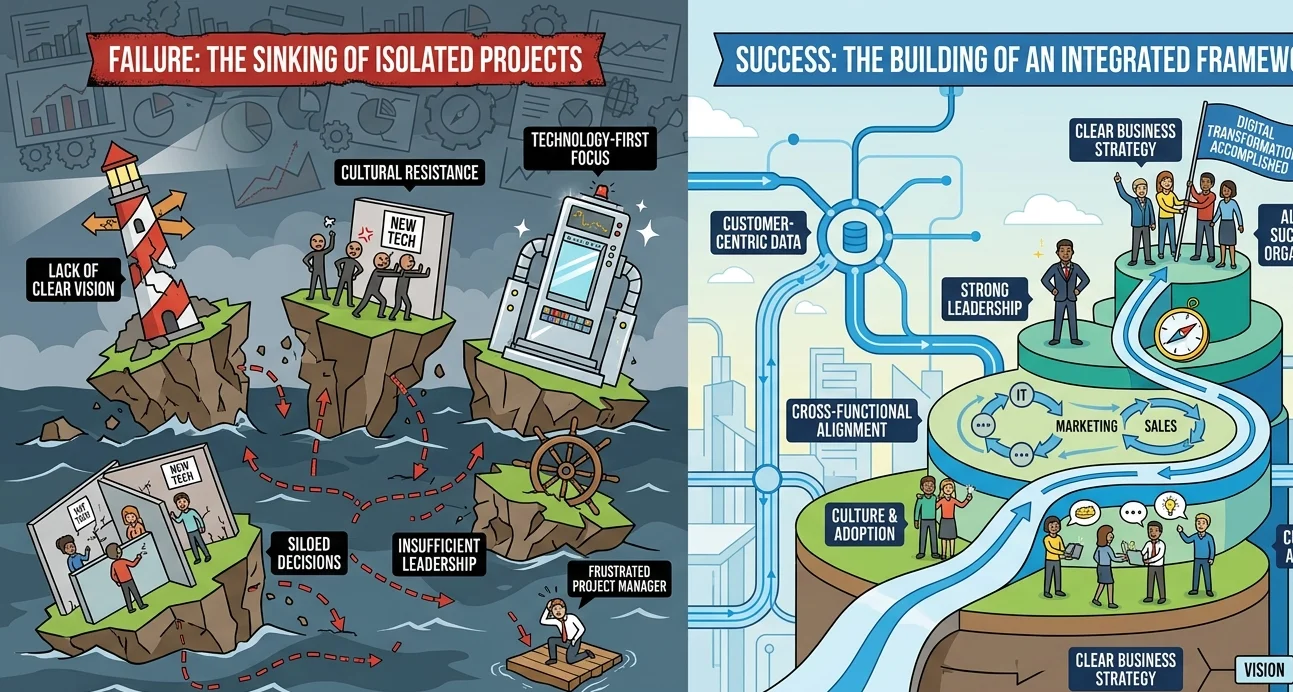
Digital transformation has become a priority for almost every enterprise. The goal is clear: improve efficiency, reduce costs, and create better visibility across operations.
Yet a large percentage of these initiatives fall short.
Not because companies lack ambition. Not because they choose the wrong tools.
They fail because transformation is approached as a technology upgrade, instead of a business-wide structural change.
What this really means is simple. If systems, processes, and people are not aligned, even the best technology won’t deliver results.
The Real Reason Digital Transformation Fails
Let’s break it down.
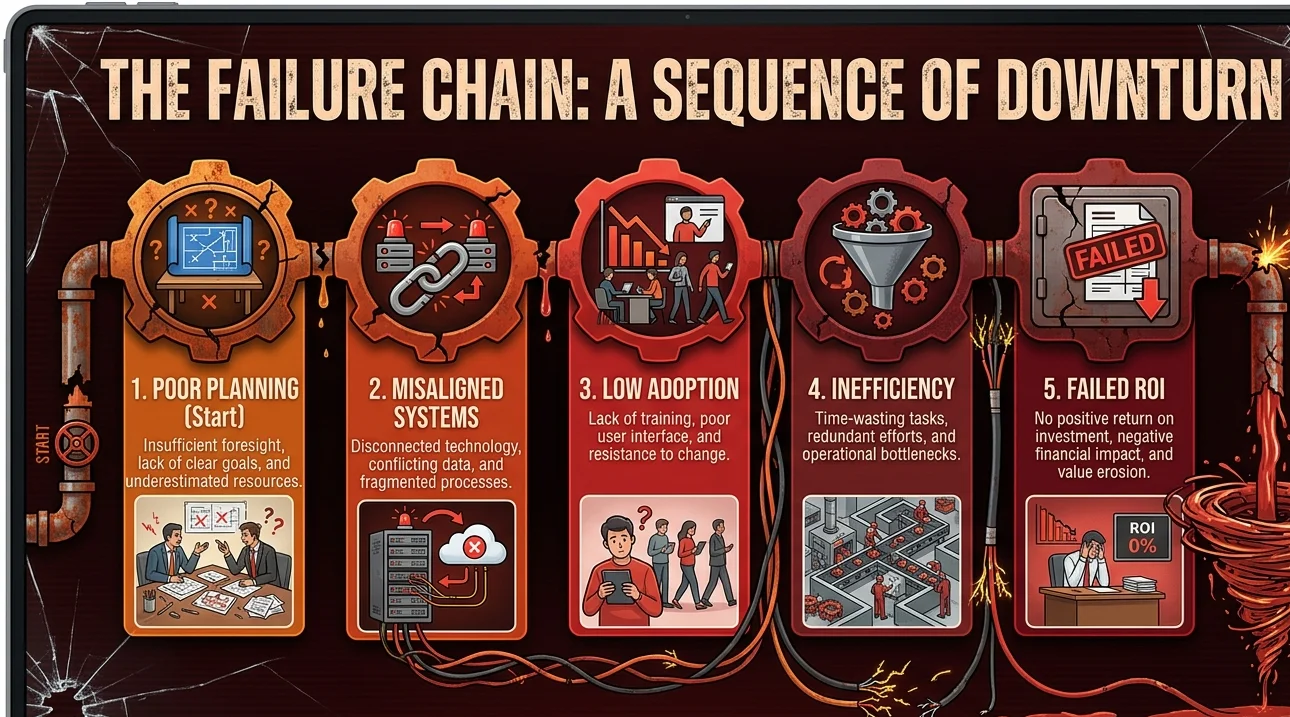
1. Technology Is Chosen Before Strategy
Many organizations jump straight into selecting platforms, tools, or vendors.
The thinking is:
“If we implement the right technology, everything else will improve.”
But without clearly defined business goals, this leads to systems that don’t solve real problems.
You end up with tools that are technically advanced but operationally irrelevant.
2. Existing Workflows Are Ignored
New systems are often introduced without understanding how teams actually work.
As a result:
- Employees resist change
- Processes become slower instead of faster
- Workarounds start appearing
Instead of improving efficiency, transformation creates friction.
3. No Clear Definition of Success
If you can’t measure success, you can’t achieve it.
Many transformation initiatives lack:
- Defined KPIs
- Baseline performance data
- Clear targets
Without these, it becomes impossible to track whether the transformation is delivering value.
4. Siloed Execution Across Departments
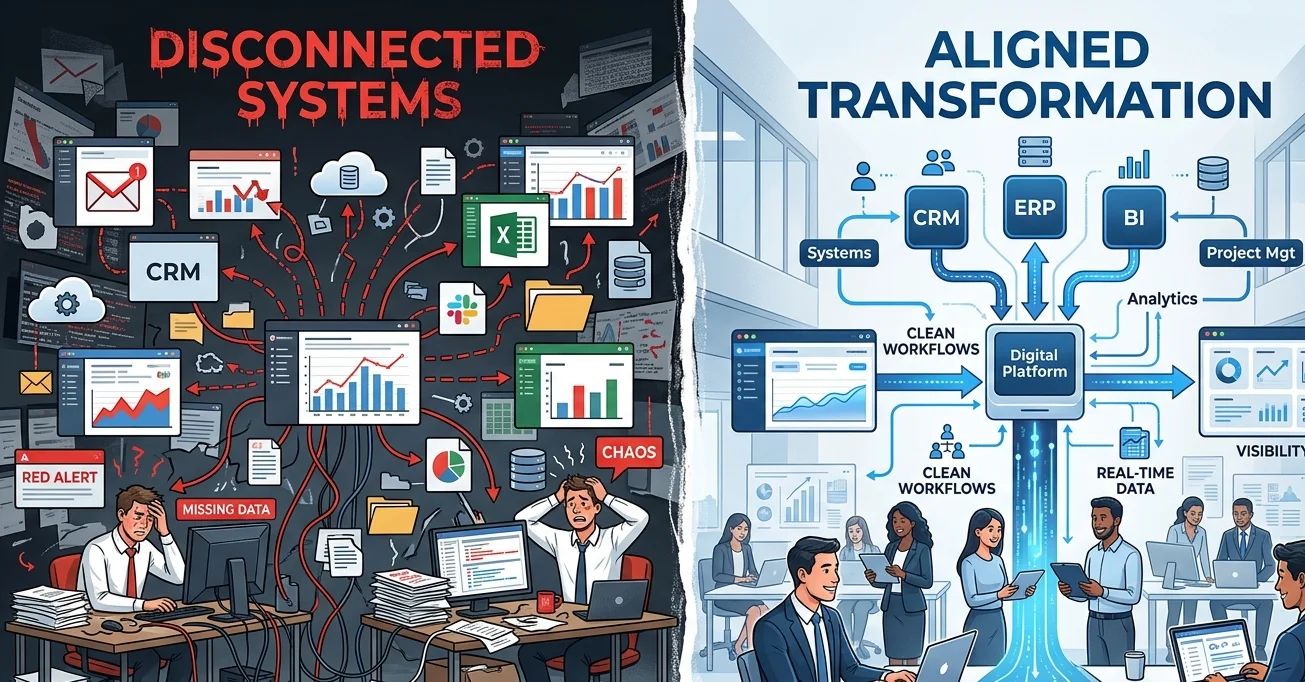
Different teams adopt different tools and processes independently.
This leads to:
- Data inconsistency
- Lack of visibility
- Integration challenges
Instead of one unified system, the organization ends up with multiple disconnected environments.
5. Change Management Is Overlooked
Transformation is not just technical. It affects people.
When teams are not trained or involved:
- Adoption drops
- Productivity decreases
- Systems are underutilized
This is one of the most common and most expensive mistakes.
What Successful Digital Transformation Looks Like
Now let’s flip the perspective.
Organizations that get this right follow a very different approach.
1. Start with Business Objectives, Not Tools
Before any technology decision, define:
- What needs to improve
- Why it matters
- How success will be measured
This creates clarity and direction for the entire initiative.
2. Map Current Systems and Processes
You need a clear view of:
- Existing workflows
- Data movement
- System dependencies
This step reveals inefficiencies and highlights where transformation will create the most impact.
3. Build a Structured, Phased Roadmap
Trying to transform everything at once increases risk.
Instead:
- Break the initiative into phases
- Prioritize high-impact areas
- Validate results at each step
This reduces disruption and ensures steady progress.
4. Align Teams Early
Transformation works only when people adopt it.
That requires:
- Stakeholder involvement from the start
- Clear communication
- Defined responsibilities
When teams are aligned, execution becomes smoother.
5. Integrate Systems, Don’t Isolate Them
The goal is not to add more tools.
The goal is to create a connected ecosystem where:
- Data flows seamlessly
- Systems communicate effectively
- Decisions are based on real-time insights
6. Measure, Optimize, Repeat
Transformation is not a one-time project.
It requires:
- Continuous performance tracking
- Regular optimization
- Ongoing improvement
This is how long-term value is created.
What This Means for Enterprise Teams
Digital transformation is not about adopting new tools.
It’s about changing how your organization operates at its core.
When done right, it leads to:
- Faster decision making
- Better operational efficiency
- Improved data visibility
- Scalable systems
When done wrong, it results in:
- Increased complexity
- Wasted investment
- Low adoption
- Minimal impact
The difference comes down to structure, alignment, and execution.
Final Thoughts
Here’s the bottom line.
Technology is only one part of transformation.
Strategy, processes, and people are what determine success.
Organizations that approach transformation as a structured, business-driven initiative see measurable results.
Those that don’t end up with expensive systems that fail to deliver.